


Professional Pavement Marking Services for California Parking Lots and Roads
Professional pavement markings services provide essential navigation and safety elements beyond basic parking space striping for California properties from Los Angeles to Orange County. Pavement markings include directional arrows guiding traffic flow, stop bars controlling intersections, pedestrian crosswalks protecting foot traffic, accessible parking symbols meeting ADA requirements, text markings identifying spaces and restrictions, loading zone designation, and custom symbols for specific property needs. Professional application requires precise stencils ensuring uniform appearance, appropriate paint selection matching durability needs, proper surface preparation for adhesion, skilled application creating crisp edges, and compliance with federal and state standards.
This comprehensive guide explains common pavement marking types and purposes, professional application methods and materials, durability expectations for different markings, regulatory compliance requirements, cost considerations, and maintenance needs helping California property owners understand pavement marking services complementing parking lot striping creating complete functional parking areas.
Why Pavement Markings Matter
Pavement markings serve critical functions beyond aesthetic appearance.
Traffic Flow and Navigation
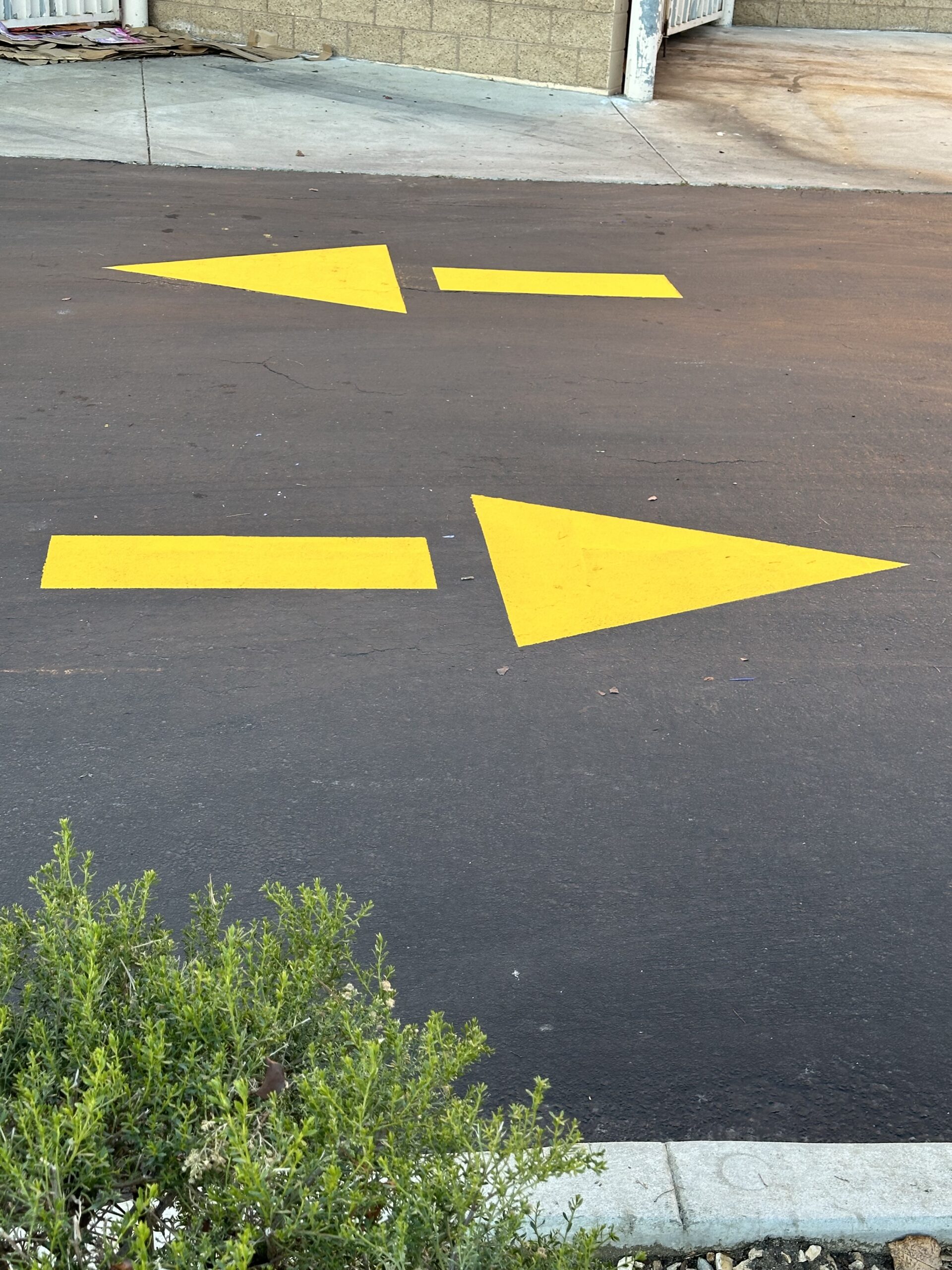
Directional arrows guide drivers through parking lots preventing confusion and wrong-way travel. Stop bars establish clear stopping points at intersections. Turn arrows show permitted turning directions. One-way arrows prevent incorrect travel. Exit arrows guide drivers toward exits. Through arrows indicate straight travel lanes.
Well-marked parking lots function smoothly with predictable traffic patterns. Drivers navigate confidently reducing conflicts and confusion. Clear markings improve overall parking lot safety throughout properties.
Pedestrian Safety
Crosswalk markings designate safe pedestrian crossing areas alerting drivers to watch for foot traffic. Well-marked crosswalks channel pedestrians to visible locations rather than random crossing creating unpredictable conflicts. The markings improve both driver awareness and pedestrian safety.
Understanding slip, trip, and fall prevention includes protecting pedestrians through proper crosswalk markings and clear pathways.
Regulatory Compliance
Certain pavement markings face regulatory requirements. Accessible parking spaces require the International Symbol of Access (wheelchair symbol) painted on pavement surfaces. Some jurisdictions require specific crosswalk marking patterns. Fire lanes need “No Parking Fire Lane” text at specified intervals. Loading zones require proper designation.
Professional compliance services ensure properties meet all pavement marking requirements preventing violations.
Space Designation and Organization
Text markings identify reserved spaces, visitor parking, loading zones, employee areas, and special designations. Numbered spaces help properties track parking assignments. Department or tenant names painted in spaces establish authorization. Time limit markings specify parking duration restrictions.
Clear designation reduces parking disputes and enforcement needs. Drivers immediately identify where they can and cannot park.
Professional Property Image
Quality pavement markings demonstrate property care and professionalism. Fresh crisp symbols and text create positive impressions. Faded illegible markings suggest neglected poorly-managed properties. Commercial properties particularly benefit from professional markings supporting overall property image.
Common Pavement Marking Types
Directional Arrows
Directional arrows represent the most common pavement markings beyond basic striping. Straight arrows show through traffic lanes, left turn arrows designate turning movements, right turn arrows control right-turning traffic, and combination arrows show multiple permitted directions. Properties typically paint arrows in drive aisles and at decision points guiding logical traffic flow.
Standard arrow sizes range from 6-8 feet long for drive aisles. Smaller 4-5 foot arrows work in tight spaces though visibility decreases. Professional contractors use precision stencils creating uniform arrow appearance throughout properties.
Stop Bars
Stop bars are solid white lines 12-24 inches wide painted perpendicular to traffic flow showing where vehicles should stop at intersections, before crosswalks, at parking lot exits to streets, and at controlled entry points. The bars establish clear stopping positions preventing vehicles from blocking crosswalks or entering roadways prematurely.
Professional stop bars extend across full lane width creating unmistakable stopping references. The wide white bands remain visible even in rain when narrow lines might disappear.
Pedestrian Crosswalks
Crosswalk markings designate pedestrian crossing areas using several standard patterns. Parallel line crosswalks use two solid white lines 6-10 feet apart defining crossing zones. Ladder style crosswalks add perpendicular bars between parallel lines creating highly visible patterns. Zebra crosswalks use alternating white bars creating maximum visibility popular in high-pedestrian areas.
California properties should use crosswalk patterns meeting local standards. Some jurisdictions specify required crosswalk designs for different applications. Crosswalks improve pedestrian safety by channeling foot traffic to visible predictable locations while alerting drivers to watch for pedestrians.
Accessible Parking Symbols
ADA accessible parking spaces require the International Symbol of Access (wheelchair symbol) painted on pavement in addition to required vertical signage. The symbol uses blue paint on white or natural pavement background creating high contrast visibility. Standard symbols measure 36 inches square though larger symbols improve visibility in large parking areas.
Professional contractors use precision stencils ensuring uniform symbol appearance meeting accessibility standards. The symbols must remain clearly visible and properly proportioned for compliance. Van-accessible spaces sometimes add “Van Accessible” text in pavement markings.
Text Markings
Text markings serve various identification and regulatory purposes. “Stop” text reinforces stop bar locations. “Slow” text warns drivers to reduce speed. “Reserved” identifies designated spaces. Tenant or department names mark assigned parking. “Visitor” designates guest spaces. “Loading Only” marks delivery zones. “No Parking” prohibits parking in specific areas. “Fire Lane” identifies emergency access routes.
Text markings use standard fonts and sizes for readability. Letters typically measure 18-36 inches tall depending on viewing distance and importance. Professional contractors use stencils ensuring uniform letter height and spacing creating professional appearance.
Loading Zone Markings
Loading zones use distinctive yellow curb paint and pavement markings designating delivery vehicle areas. Diagonal yellow striping sometimes fills loading zones creating clear visual designation. “Loading Only” text identifies zones. Time limit markings specify maximum loading duration. Truck symbols indicate commercial vehicle zones.
Clear loading zone designation prevents unauthorized parking ensuring delivery access supporting business operations.
Speed Limit Markings
Large “5 MPH” or “10 MPH” text painted in drive aisles establishes speed limits throughout parking areas. The pavement markings reinforce posted speed limit signs improving driver awareness. Multiple speed markings throughout large parking lots maintain visibility ensuring drivers see speed limits even without noticing signs.
Numbered Space Markings
Properties assigning specific parking spaces use painted numbers identifying each space. Numbers typically measure 12-24 inches tall painted at parking space heads visible from driving positions. Sequential numbering helps properties track assignments and enforcement.
Some properties use letter-number combinations designating buildings and spaces. Others use department codes or tenant identifiers. Professional contractors ensure uniform number appearance and consistent placement throughout properties.
Custom Symbols and Graphics
Properties sometimes request custom pavement markings including company logos, decorative elements, specialized symbols for specific uses, or property-specific designation systems. Custom work requires specialized stencils and careful application ensuring quality appearance.
Custom markings cost more than standard symbols but create distinctive property identity when properly executed.
Professional Application Methods
Stencil Use and Precision
Professional pavement marking requires precision stencils ensuring uniform appearance. Quality contractors invest in durable reusable stencils for common symbols including directional arrows in various sizes, stop and slow text, accessible parking symbols, turn arrows and combinations, and standard letter and number sets.
Stencils typically use heavy plastic or metal construction withstanding repeated use and cleaning. Proper stencil maintenance keeps edges sharp producing crisp markings. Contractors position stencils carefully ensuring proper alignment and location before painting.
Surface Preparation Requirements
Quality pavement markings require thorough surface preparation like parking space striping. Contractors clean marking areas removing dirt, oil, debris, and old deteriorated markings. They verify pavement remains solid and dry before application. Some situations require crack repair before marking application.
Proper preparation ensures paint bonds correctly creating durable long-lasting markings. Paint applied to dirty contaminated surfaces fails quickly requiring expensive redo work.
Paint Application Technique
Professional contractors apply pavement markings using airless spray equipment providing even coverage and crisp edges. They secure stencils firmly preventing paint bleeding under edges. Multiple light coats often produce better results than single heavy application particularly for symbols requiring opacity over dark pavement.
Experienced applicators maintain consistent spray distance and speed producing uniform coverage without overspray or undercoverage. Proper technique creates professional results distinguishable from amateur work.
Paint Type Selection
Different traffic paint types suit different pavement marking applications. Water-based acrylic paint works well for most markings at economical cost. Alkyd paint provides enhanced durability for high-traffic areas. Thermoplastic application creates permanent markings for critical symbols and crosswalks requiring maximum longevity.
Accessible parking symbols and crosswalks often justify premium paint or thermoplastic given their importance and high visibility. Directional arrows and text may use standard paint balancing cost versus durability for less critical markings.
Color Selection and Visibility
Standard pavement marking colors follow regulatory and practical conventions. White paint dominates for arrows, text, symbols, stop bars, and most markings. Blue designates accessible parking symbols and sometimes EV charging spaces. Yellow indicates loading zones, no parking areas, and caution zones. Red marks fire lanes and prohibited areas.
Color selection affects visibility and compliance. Properties should follow standard color conventions ensuring driver recognition and regulatory compliance.
Drying Time and Traffic Management
Fresh pavement markings require adequate drying time before traffic exposure. Water-based paint typically dries to touch within 15-30 minutes but needs 1-4 hours before vehicle traffic. Thermoplastic sets within 15-30 minutes cooling to traffic-safe temperatures quickly.
Contractors manage traffic during application using cones, barricades, or flaggers preventing vehicles from driving on wet markings. Proper traffic control prevents marking damage ensuring quality results.
Durability and Maintenance
Expected Marking Lifespan
Pavement marking durability varies by location and traffic exposure. High-traffic areas like main drive aisles see markings wear faster from continuous vehicle passage. Turn arrows in maneuvering areas experience accelerated wear from tire scrubbing. Parking space markings receiving less traffic maintain visibility longer.
Standard water-based paint markings typically last 12-24 months in California parking lots before fading significantly. Premium alkyd paint extends to 18-30 months. Thermoplastic symbols and crosswalks can last 5-10 years providing excellent long-term value despite higher initial cost.
Factors Affecting Durability
Several factors influence pavement marking life. Traffic volume and type affect wear rates with heavy vehicles accelerating deterioration. California climate varies from mild coastal areas to harsh inland conditions impacting paint longevity. UV exposure intensity causes fading with intense sun degrading markings faster. Surface preparation quality affects paint bonding and durability. Paint type and application thickness determine base lifespan.
Inspection and Touch-Up
Properties should inspect pavement markings annually evaluating visibility and condition. High-traffic areas may need touch-up between complete remarking. Critical markings like accessible symbols and crosswalks require continuous visibility maintaining compliance and safety.
Touch-up programs extend time between complete remarking by refreshing only faded areas. However, color variations develop over time making complete remarking eventually necessary for uniform appearance.
Coordination with Striping
Most properties coordinate pavement marking renewal with complete parking lot restriping. Contractors apply all markings fresh during restriping projects ensuring uniform appearance and age. This coordination prevents mismatched colors and conditions between space lines and pavement markings.
Understanding service lifecycles helps properties coordinate marking renewal with other maintenance activities.
Regulatory Compliance Considerations
Accessible Parking Symbol Requirements
Federal and California ADA regulations require accessible parking symbols meeting specific standards. Symbols must use proper wheelchair icon design following exact specifications, measure adequate size for visibility (minimum 36 inches recommended), use blue paint creating required contrast, and remain clearly visible and well-maintained.
Professional ADA audits verify accessible parking symbol compliance preventing violations. Missing faded or non-compliant symbols create accessibility violations triggering citations or lawsuits.
Fire Lane Text Requirements
Fire lane markings require “No Parking Fire Lane” text at specified intervals typically every 25-50 feet depending on jurisdiction. Text must use adequate size for visibility from driver positions, employ red or white paint meeting fire code, remain clearly legible and well-maintained, and complement required vertical signage.
Fire marshal enforcement of fire lane text markings is strict. Faded illegible text creates violations requiring immediate correction.
Crosswalk Pattern Standards
Some jurisdictions specify required crosswalk marking patterns for different applications. California Vehicle Code establishes crosswalk definitions and standards. Local ordinances may mandate specific patterns, widths, or materials. Properties should verify local requirements before crosswalk installation ensuring compliance.
Manual on Uniform Traffic Control Devices
The Manual on Uniform Traffic Control Devices (MUTCD) establishes federal standards for traffic control including pavement markings. While MUTCD focuses primarily on public roadways, many parking lot markings follow MUTCD conventions ensuring driver recognition. Stop bars, arrows, and text markings using MUTCD standards benefit from universal driver familiarity.
Pavement Marking Costs
Pricing Structures
Pavement marking pricing varies by marking type and quantity. Directional arrows typically cost $25-75 each depending on size and paint type. Stop bars run $50-150 per bar based on width and length. Crosswalks cost $150-500 depending on size, pattern complexity, and materials. Accessible parking symbols run $35-85 each for standard paint or $150-300 for thermoplastic. Text markings cost $15-50 per word depending on letter size and quantity.
Complex custom markings requiring specialized stencils cost more through stencil creation expense and additional application labor.
Factors Affecting Costs
Several factors influence final pavement marking costs. Marking size affects material usage and labor time with larger markings costing more. Paint type selection creates cost variation with thermoplastic costing significantly more than water-based paint. Quantity discounts apply when marking many identical symbols. Surface preparation requirements add costs when extensive cleaning or repair is needed. Property access affects mobilization expense.
Bundling with Striping Projects
Properties achieve best value bundling pavement markings with complete parking lot restriping projects. Single contractor mobilization serves all needs. Paint and equipment already on-site apply markings efficiently. Package pricing often provides discounts versus separate projects.
Properties should specify all desired markings when requesting striping quotes ensuring comprehensive proposals and accurate cost estimates.
Cost Versus Benefit Analysis
Pavement markings cost more than simple striping but provide substantial benefits. Improved traffic flow reduces conflicts and accidents. Clear pedestrian crosswalks improve safety reducing liability exposure. Accessible parking symbols prevent expensive violations and lawsuits. Loading zone designation supports business operations. The benefits justify modest incremental costs beyond basic striping.
Property-Specific Marking Needs
Retail and Commercial Properties
Commercial properties benefit from extensive pavement markings improving customer experience. Directional arrows guide traffic flow reducing confusion. Crosswalks protect pedestrians shopping between stores. Reserved customer parking markings show accommodation. Loading zone designation manages deliveries. Professional markings contribute to overall property image.
Office Buildings
Office properties need functional markings supporting daily operations. Directional arrows manage traffic flow during rush periods. Reserved tenant parking identification prevents disputes. Visitor parking designation helps guests. Stop bars control parking lot exits. Professional markings demonstrate property management quality.
Industrial and Warehouse Facilities
Industrial properties require specialized markings including forklift traffic lanes and directional arrows, loading zone designation and truck guidance, pedestrian safety crosswalks in high-traffic areas, hazard zone identification and warnings, and equipment storage area designation. Durability matters more than appearance in industrial settings suggesting premium paint for critical markings.
Multi-Family Residential
Apartment and condominium properties use markings improving resident parking experience. Numbered space assignments reduce confusion. Visitor parking designation helps guests. Directional arrows manage traffic flow. Speed limit markings promote safety in residential areas with children.
Municipal Properties
Government facilities should maintain exemplary pavement markings demonstrating proper public asset management. Comprehensive crosswalk marking protects pedestrians. Clear directional control manages public traffic. Accessible parking symbols ensure compliance. Regular maintenance prevents deterioration.
Service Areas
We provide professional Pavement Marking services throughout Southern California:
Los Angeles Area: Pavement Marking Los Angeles, Pavement Marking Burbank, Pavement Marking Glendale, Pavement Marking Pasadena, Pavement Marking Santa Monica, Pavement Marking Santa Clarita,
Pavement Marking Pomona, Pavement Marking Alhambra, Pavement Marking Santa Monica, Pavement Marking Beverly Hills, Pavement Marking West Hollywood, Pavement Marking Century City, Pavement Marking Baldwin Park, Pavement Marking Marina Del Rey, Pavement Marking Riverside, Pavement Marking Ventura
San Fernando Valley: Pavement Marking Encino, Pavement Marking Van Nuys, Pavement Marking Woodland Hills, Pavement Marking Mission hills, Pavement Marking West Hills, Pavement Marking Northridge
Orange County: Pavement Marking Orange County
Antelope Valley: Pavement Marking Palmdale, Pavement Marking Lancaster, Pavement Marking Rosamond, Pavement Marking Ridgecrest, Pavement Marking Tehachapi
Inland Empire: Pavement Marking San Bernardino, Pavement Marking Victorville, Pavement Marking Hesperia, Pavement Marking Barstow, Pavement Marking Ontario
Central California: Pavement Marking Bakersfield, Pavement Marking Visalia, Pavement Marking Hanford, Pavement Marking Porterville, Pavement Marking Delano, Pavement Marking Wasco, Pavement Marking Tulare,
Related Pavement Marking Services
- Professional Parking Lot Striping
- Professional Equipment and Methods
- Traffic Paint Types
- ADA Compliance Services
- Fire Lane Striping
- Sign Installation
- Commercial Services
- Warehouse Striping
- Seal Coating
- View Our Work
Professional Pavement Markings Complete Parking Lot Functionality
Pavement marking services provide essential navigation, safety, and compliance elements complementing parking space striping creating fully functional California parking lots. Professional markings include precision stencil application ensuring uniform appearance, appropriate paint selection matching durability needs, thorough surface preparation for lasting adhesion, skilled technique creating crisp professional results, and regulatory compliance preventing violations.
Don’t settle for incomplete parking lots with only basic space striping. Directional arrows, pedestrian crosswalks, accessible parking symbols, stop bars, and text markings improve traffic flow, protect pedestrians, ensure regulatory compliance, and demonstrate professional property management. Quality pavement markings justify modest additional cost through substantial functional and safety benefits.
Contact us for professional pavement marking services. We assess properties recommending appropriate markings improving function and compliance, apply all markings using precision stencils and quality materials, coordinate marking installation with complete striping projects, ensure accessibility and fire code compliance, and maintain markings through regular inspection and renewal. Our California expertise ensures properties have complete professional pavement marking meeting all needs.
For comprehensive information about professional parking lot striping services, visit our frequently asked questions page or view our completed projects. Review our complete striping guide and explore our comprehensive resources for additional pavement marking information.
This guide provides general information about pavement marking services for California parking lots. Specific marking requirements vary by jurisdiction, property type, and applicable regulations. Federal ADA regulations, California fire code, and local ordinances establish different requirements for various marking types. Marking specifications including size, color, placement, and materials follow specific standards. Properties should verify current requirements through professional consultation before pavement marking installation. Some markings are legally required while others provide practical benefits. Consult qualified professionals for guidance specific to your property situation.
See us at the BBB
Our Licensed Contractor Services
Bowman Line Striping Inc is a fully licensed California asphalt contractor providing the complete range of professional pavement maintenance services for commercial properties throughout Southern California and the Central Valley. Operating from our Van Nuys location serving the greater Los Angeles area and San Fernando Valley, every project is handled by our experienced team with professional-grade equipment, traffic-grade materials, and documented compliance standards. Explore our full scope of licensed contractor services:
Asphalt Contractor — Veteran-owned, California licensed (#1138257) asphalt contractor delivering professional parking lot striping, seal coating, crack filling, and full pavement maintenance for commercial and industrial properties throughout Southern California. | Licensed Contractor Service — Full-scope licensed contractor service covering every phase of commercial parking lot maintenance, ADA compliance, fire lane compliance, and asphalt upkeep from a single point of contact. | Line Marking Service — Professional line marking using commercial airless striping machines and traffic-grade paint with UV inhibitors and glass bead reflectivity for maximum durability and visibility. | Paving Contractor — Parking Lot Striping and Seal Coating — Full-service paving contractor covering parking lot striping, seal coating, crack filling, and complete pavement maintenance from a single licensed contractor. | Property Maintenance Striping and Seal Coating — Systematic property maintenance programs keeping commercial portfolios in continuous ADA compliance, fire code compliance, and professional condition year over year. | Road Construction and Pavement Marking — MUTCD-compliant pavement marking and asphalt maintenance striping for road construction, public works, and municipal projects with DIR prevailing wage registration. | Sign Shop — Parking Lot Sign Installation — Professional parking lot sign installation including ADA accessible parking signs, fire lane prohibition signs, traffic control signage, and custom lot signs manufactured to California Title 24 specifications.
Clear markings save lives. Let Bowman Line Striping lay the lines that lead the way.
Explore Each Compliance Area
Use the links below to dive deeper into each requirement:
- Van-Accessible ADA Parking
- EV Charging Striping & Compliance
- Van-Accessible EV Charging
- Fire Lane Striping & Compliance
- Wheel Stop Installation & Compliance
- Parking Lot Compliance In California
- Signage Installation Compliance
- Complete Guide To Parking Lot Striping
- Complete Guide To Seal Coating
- Seal Coating Services
- Asphalt Crack Filling Service
- Pavement Markings
- Warehouse Striping Materials And Compliance Guide
- Property Management Parking Lot Striping & Seal Coating Services
- ADA Striping And ADA Compliance Services
- EV Charging Retrofit Striping
- California ADA Audit & Inspection Services
- Parking Lot Re-Striping & Maintenance Plans
- New Construction Parking Lot Striping
- Municipal & Public Works Striping Services
- Commercial & Industrial Parking Lot Striping
- Emergency Fire Lane Re-Striping
- Parking Lot Striping Safety & Liability Guide for California Parking Lot Owners
- Seal Coating vs Parking Lot Striping: Life cycles
- The Complete 2026 Parking Lot Striping Guide
- ADA Parking Rules in California
- ADA Lawsuits and How Striping Prevents Them
- ADA Parking Rules in California – Simple Guide for Property Owners
- CASp Inspection Preparation for California Property Owners
- Parking Lot Guides and Resources for California Property Owners
- Parking Lot Inspection Services and Documentation
- Parking Lot Maintenance Schedules
- Professional Line Striping Equipment and Methods
- Slip, Trip and Fall Prevention in Parking Lots
- Traffic Paint Types for Parking Lots
- Who We Serve: Parking Lot Striping for Every Property Type